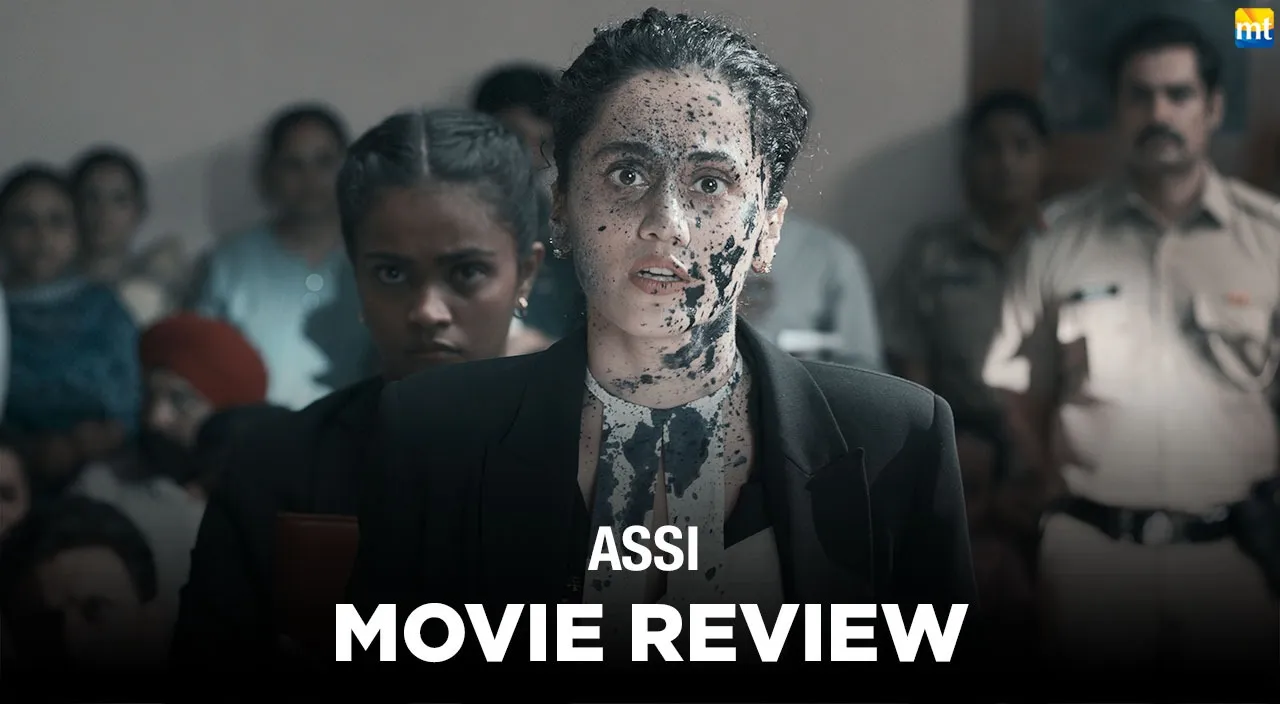
Movie – Assi
Director – Anubhav Sinha
Starcast – Taapsee Pannu, Kani Kusruti, Zeeshan, Naseeruddin Shah, Supriya Pathak
Ratings – 3.0
The story follows Parima (Kani Kusruti), who survives a horrific assault inside a moving car only to be abandoned on railway tracks. As she grapples with the psychological aftermath, Advocate Raavi (Taapsee Pannu) takes up her case. The legal climb is steep lack of DNA evidence, no identification of the assailants, and zero direct proof.
Just as the system seems ready to fail her, a mysterious vigilante movement known as “Umbrella Man” emerges. The film then pivots to explore whether true justice comes from the robes of a judge or the shadows of the street.
While the film is undeniably thought-provoking, it struggles with significant narrative potholes:
-
Courtroom Logic: For a modern thriller, the lack of focus on digital footprints (like phone location data) makes the investigation feel dated and sharpens the sense of “underdeveloped” writing.
-
Vigilante Tropes: The “Umbrella Man” subplot occasionally veers into cliché, serving as a convenient plot device rather than a grounded development.
-
Pacing: The finale feels needlessly prolonged, testing the viewer’s patience despite the gravity of the subject matter.
- Performances
-
Taapsee Pannu: Delivers high-voltage intensity in the courtroom, though she occasionally struggles to maintain that emotional depth in quieter, domestic scenes.
-
Kani Kusruti: The standout performer. She portrays trauma with a haunting sincerity that avoids the trap of overacting.
-
The Veterans: It’s a bit of a letdown to see legends like Naseeruddin Shah and Supriya Pathak underutilized in roles that feel like mere cameos due to weak character arcs.
-
Revathi: Brings a much-needed maturity and groundedness to the screen.
Filmmaking
Director Anubhav Sinha and his team use visual language to mirror a “fractured justice system.” The cinematography is intentionally unconventional using stable frames for moving subjects and fractured compositions to evoke discomfort. The background score is equally effective, amping up the tension without becoming melodramatic.
Conclusion
Assi is a difficult watch, not just because of its subject matter, but because of its cinematic inconsistencies. However, Anubhav Sinha’s vision carries an urgency that is hard to ignore. You might leave the theater irritated by the plot holes, but you won’t leave unaffected. It’s a film that places the burden of “doing better” squarely on the shoulders of the audience.